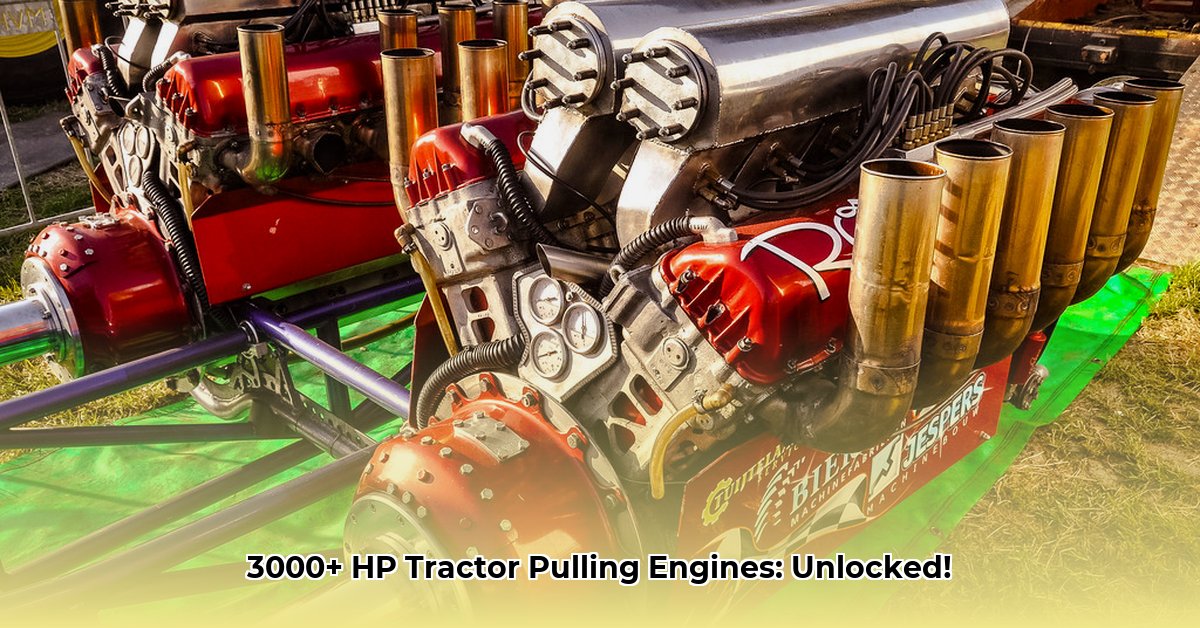
Tractor Pulling Engines: A 3000+ HP Deep Dive
Pro Stock tractor pulling isn't your average agricultural competition. It's a spectacle of raw power, where heavily modified engines generate over 3000 horsepower—a testament to human engineering prowess. These aren't your grandfather's farm tractors; they're purpose-built machines, pushing the boundaries of what's possible. For more information on North Carolina tractor pulls, check out this useful resource. This article delves into the engineering marvel behind these incredible machines.
Engine Fundamentals: Building a Beast
The foundation of every competitive tractor is a heavily modified engine—typically a V8 or inline-six (I6), often based on robust agricultural engine designs. However, "stock" is a misnomer. These engines undergo a complete transformation. The engine block itself is reinforced, and every component is meticulously selected and modified for maximum performance and durability.
Extreme Modifications: Turning Up the Heat
To achieve such staggering horsepower, several crucial modifications are implemented:
- Increased Displacement: The cylinders are bored out and the stroke lengthened, significantly increasing the engine's capacity to ingest air and fuel. This is fundamental to achieving high power output.
- Forced Induction: Massive turbochargers force enormous volumes of air into the cylinders, supercharging the combustion process. These aren't your average turbos; they're custom-designed behemoths.
- Water Injection: To counteract the extreme heat generated by the forced induction and increased combustion, a water injection system cools the intake air, preventing catastrophic engine failure. This is a critical reliability factor.
- Sophisticated Fuel Systems: High-pressure fuel injection systems deliver precisely metered quantities of diesel fuel at incredibly high pressures, maximizing combustion efficiency and power output.
How much power is too much? Considering that these engines regularly exceed 3000 horsepower—is there a limit? The short answer is, the limit is perpetually redefined by innovative engineering and determined teams.
Turbocharging: The Heart of the Powerhouse
The turbochargers are the linchpins of these engines, acting as giant air compressors, forcing massive amounts of air into the cylinders. More air translates to more fuel burned and, consequently, significantly increased power. The size and design of the turbo are carefully selected to match the engine's specifications and the desired horsepower target. Different teams employ varying strategies, leading to a fascinating competition of engineering ingenuity. Larger turbos might prioritize maximum power, while smaller, more responsive units offer quicker power delivery—a strategic choice with performance trade-offs.
Fuel Systems: Delivering the Fuel
Precision fuel delivery is equally vital. High-pressure fuel injection systems are a necessity, precisely metering vast amounts of diesel fuel into the combustion chambers. The timing and volume of fuel injection significantly impact engine performance, and getting this balance right is a constant challenge. Teams continually refine their fuel systems to gain even the slightest edge.
Weight Distribution: Keeping it on the Track
Raw power is useless without effective traction. Weight distribution is crucial for maximizing power transfer to the drive wheels. Careful balancing of weight, engine placement, chassis design, and the addition of ballast are meticulously calculated to optimize traction and minimize wheel spin. Even minor weight adjustments significantly affect performance.
Regulations and Safety: A Necessary Balancing Act
The National Tractor Pulling Association (NTPA) and similar governing bodies enforce stringent safety regulations, ensuring fair competition and competitor safety. Mandatory features such as roll cages, emergency kill switches, and specific engine specifications mitigate the inherent risks of these powerful machines. These regulations, however, create unique engineering challenges, forcing teams to find innovative solutions while maintaining performance.
Regulatory Challenges: Navigating the Rules
The table below highlights some key regulatory challenges and their impact on engine design:
| Challenge | Impact on Engine Design | Mitigation Strategies |
|---|---|---|
| Turbocharger Size Restrictions | Limited by general guidelines, not explicit limits | Clever turbocharger design, efficient wastegate management |
| Fuel Type Restrictions | Restricted to diesel fuel | Focus on advanced fuel injection and optimized combustion |
| Emission Regulations | Potential future environmental regulations for diesel exhaust | Exploration of alternative fuels or advanced emission systems |
| Safety Standards | Mandatory safety features (roll cages, kill switches, etc.) | Stringent adherence, but also creative safety design choices |
Future Trends: What's on the Horizon?
Future advancements will likely focus on lighter, stronger materials and more efficient turbocharging. Expect improvements in combustion efficiency and a greater focus on environmentally friendly technologies. The pursuit of greater power will always be balanced with the need for enhanced reliability and sustainability.
How to Improve Pro Stock Tractor Pulling Engine Reliability
Pro Stock pulling engines face unique reliability challenges due to their extreme modifications. Careful component selection, precise tuning, and proactive maintenance are critical for extending engine lifespan. Water injection systems are vital in mitigating engine strain, but optimizing their use demands meticulous calibration. Strict adherence to regulations is crucial not only for competition but also for engine protection.